A part-by-part look at what a neighborhood mechanic will service on an out-of-warranty electric bike, what gets refused, and how to check parts support before you buy.
The warranty on an electric bicycle usually covers two years on the frame and one or two on the electrical parts, and it expires long before the bike is worn out. What matters after that is not the warranty language but a narrower question: when something fails in year four, will the shop three blocks away agree to open it, and can they get the piece that goes back in? The answer splits cleanly along one line. Parts that follow bicycle industry standards get fixed anywhere. Parts that follow one manufacturer's internal design get fixed by that manufacturer, or not at all.
1. The drivetrain, which is almost never the sticking point
Chain, cassette, derailleur, shifter, bottom bracket, headset, and seatpost on most electric city bikes are ordinary bicycle parts in ordinary sizes, and any mechanic will replace them without a second thought. A careful reader confirms this by looking for brand names stamped on the components rather than the bike maker's own logo. Shimano, SRAM, microSHIFT, and Tektro parts are stocked, cross-referenced, and substitutable. If the rear derailleur says only the name of the bike company, that is the first small signal that the design leans proprietary, and the signal usually repeats elsewhere on the machine.
2. The battery, which is the part with a lock on it
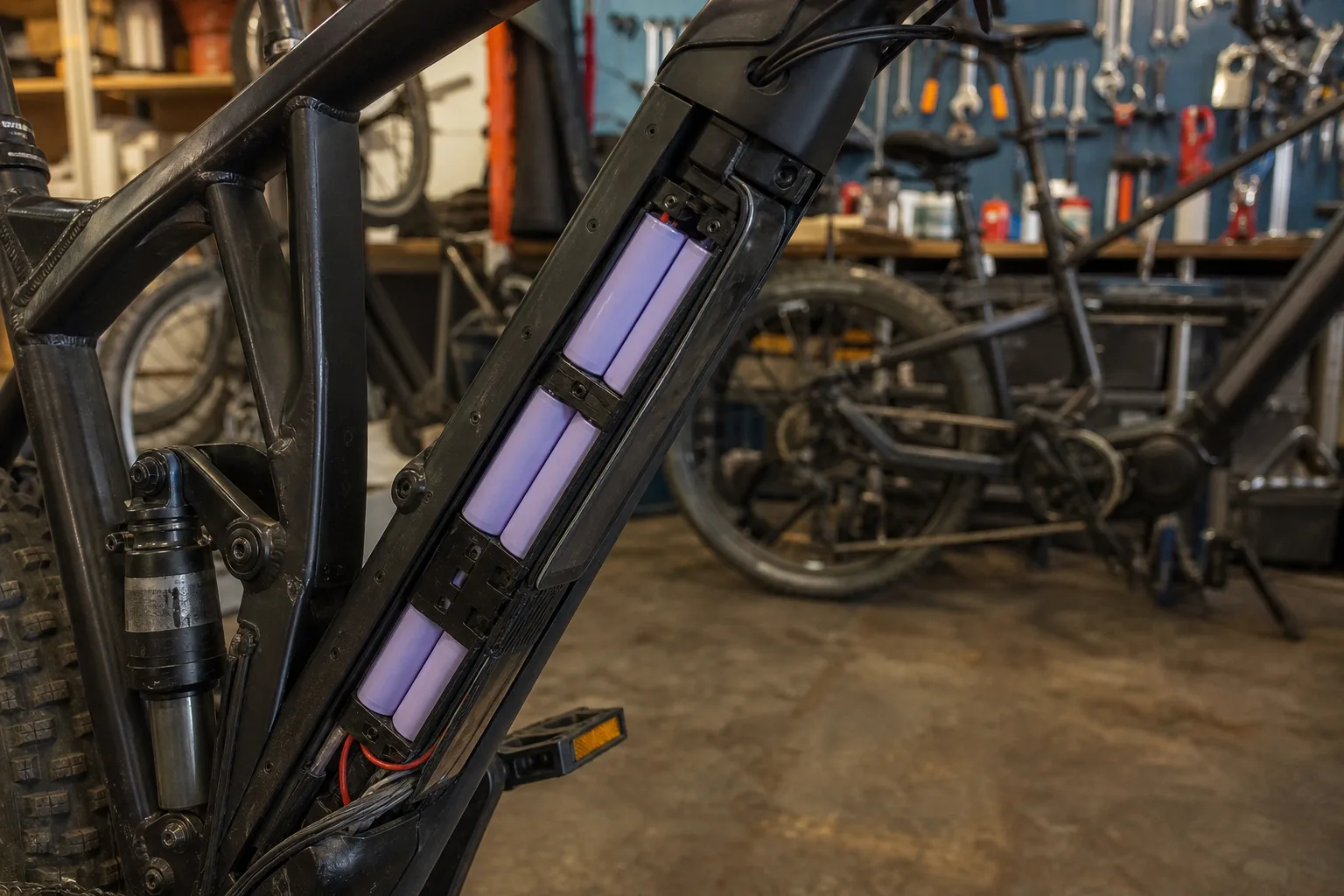
Nearly every battery pack is specific to one frame, because the case is molded to fit that downtube and the connector pinout is chosen by that manufacturer. This is the single component most likely to strand a bike. Most shops will decline to open a pack, and that refusal is a reasonable one: the cells are spot-welded, the battery management board is unlabeled, and a mistake carries fire risk. The Consumer Product Safety Commission is the federal body responsible for the safety of consumer products including e-bike battery packs, and shops track its guidance closely. The workable answer is to buy a bike whose maker sells replacement packs directly, and to verify that they are listed and in stock today.
3. Controllers, displays, and the wiring between them
A controller failure is often a connector failure, and a good mechanic will chase corroded pins, a cut wire inside a chainstay, or a display cable pulled loose at the bars. What they will not do is source a bare controller board and flash firmware to match the motor. Ask before buying whether the controller is an external unit in the frame or integrated into the motor housing. External controllers can be swapped in twenty minutes when a replacement exists. Bikes using a common motor system from a known supplier are the easiest to keep running, because parts move between brands.
4. Brake pads and tires, where fat sizes get thin
Hydraulic disc pads are cheap and universal in principle, but only if the caliper is a mainstream model. A caliper made under a house brand may take a pad shape that no shop stocks, which turns a fifteen-minute job into a two-week wait. Tires are the same story in a different size. A 20 by 4.0 fat tire and a 26 by 4.0 have real but limited aftermarket support, while a 27.5 by 2.4 or a 700 by 40 can be bought at any counter. Fat tires ride well over broken pavement. They cost more and arrive slower.
5. What to check before the money moves
Call two shops near home, name the exact model, and ask plainly whether they service it and whether they will work on the electrical side at all. Some shops have a written policy against touching brands they do not carry, and hearing that in advance is worth more than any spec sheet. Then open the manufacturer's parts page and count what is actually purchasable: battery, charger, display, controller, motor, and brake pads. A maker who publishes an exploded diagram and sells individual pieces has told you something durable about the next five years.
The bikes that stay on the road are the ones assembled from parts other people also use, with a battery that can be reordered and a motor system with a service network behind it. That is a purchasing decision, made once, and it is far easier to make at the shop counter than in year four with a dead display and a bike that will not roll.